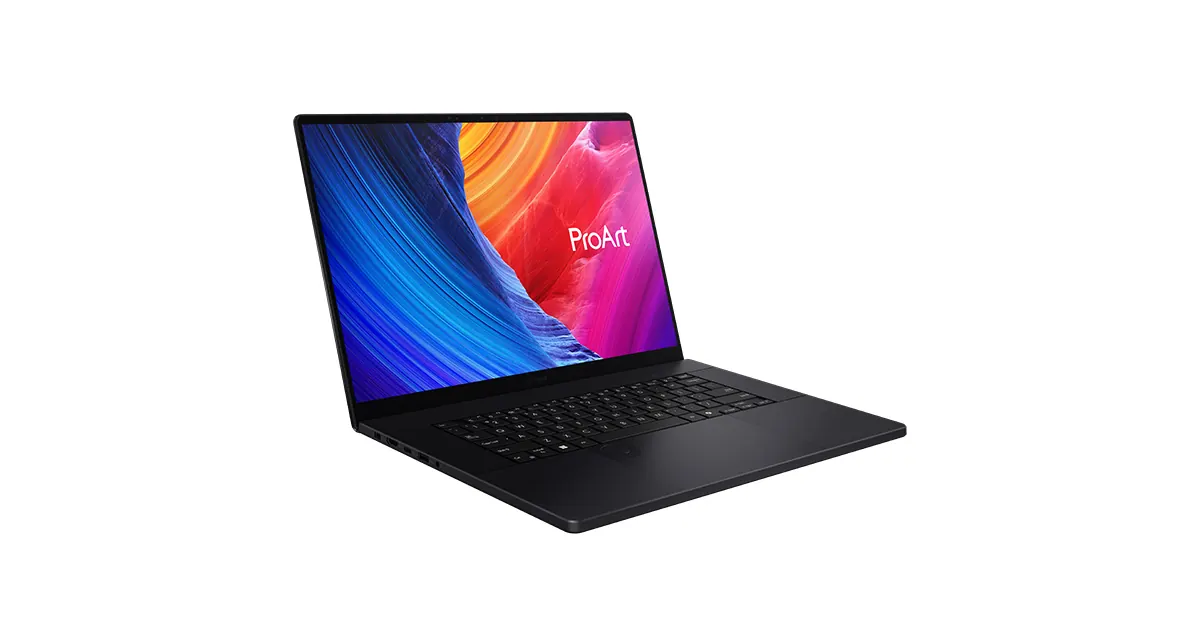
ASUS ProArt P16 Review: Laptop for creators who want studio power without carrying a brick
Many machines for content creators look like gaming notebooks trying to behave in a studio. The ASUS ProArt P16 draws attention because it tries to do the opposite: looking like a professional creation tool before looking like a showcase of brute force. This does not eliminate potency, quite the opposite. The line exists precisely to offer a strong CPU, dedicated GPU, serious OLED screen and features designed for demanding images, videos and creative flows. In 2026, when creation already includes traditional editing, AI acceleration, rendering, colorization and mobility between sets and worktables, this balance is more important than ever. P16 seems to understand this moment well. The difficulty is that it also enters a space where price, weight and real need need to be very well aligned for the purchase to make sense.
What he delivers today
ASUS sells the ProArt P16 as a laptop for creators, with an OLED screen, robust hardware, auxiliary apps and a focus on professional streams. The pitch is clear: deliver enough power for dense editing, imaging and creative use without pushing the user to a fixed station. This type of product is worth more when it avoids the feeling of improvisation on the field. If the professional can import, edit, review, pre-render and deliver cuts or compositions without running to the desktop immediately, the notebook has already accomplished much of what it needs.
The technique behind
The technical success of the ProArt P16 lies in the triad of screen, graphics acceleration and modern processor with NPU. In creation, there is no point in the notebook just being strong in the benchmark; it needs to support timeline, export, color, visual reading, bandwidth and reasonable work ergonomics. The OLED screen helps because it makes the product more coherent with image and video, while the dedicated GPU and Ryzen AI platform expand space for creative apps and emerging payloads with local AI. TechRadar highlighted precisely this combination between performance and professional focus. This matters because the P16 isn't just selling power; is selling suitability for contemporary creative work.
Where it gets it right in real use
In real-world use, the P16 tends to work very well for editors, designers, photographers and creators who need a relatively transportable machine without giving up a strong screen and a lot of hardware clearance. The positioning also helps: it doesn't try to hide the fact that it's a premium laptop for a serious production routine. For those who actually work with these loads, the price starts to be compared less with common notebooks and more with time, predictability and production autonomy. This is where the product makes the most sense. A project that closes without hindrance, a timeline that responds better and a screen that allows you to decide color and composition more safely are usually worth more, to this audience, than any initial savings on an insufficient machine.
Where does it limit
Like almost every machine of this profile, it costs a lot. And this price only becomes justifiable when the user actually monetizes the power. There are also classic strong laptop compromises: heat, shorter battery life under load, and only relative portability. The P16 is mobile for the category, don't take it in any scenario. Another point is that too robust hardware can become excessively expensive for those who mainly produce text, web or light editing. This is a product that requires conviction for professional use, not just a desire for high specifications.
The future it anticipates
The ProArt P16 anticipates a future where creative laptops must simultaneously handle traditional media and local AI workloads. ASUS seems to understand this by packaging NPU, GPU and a more professional speech than a gamer one. The open question is whether the line will be able to maintain its character as a portable studio tool without being swallowed up by competition from MacBooks Pro, Windows workstations and even compact desktops with more cost-benefit for those who don't need to move so much.
Verdict
The ASUS ProArt P16 is a very interesting purchase for creators who need real power, a good screen and professional mobility. It is not a notebook for the average user, nor does it try to appear that way. For those who work with image, video and heavier production, however, it offers a very convincing set.
Sources
- https://www.asus.com/laptops/for-creators/proart/proart-p16-h7606/
- https://www.techradar.com/pro/asus-proart-p16-laptop-review