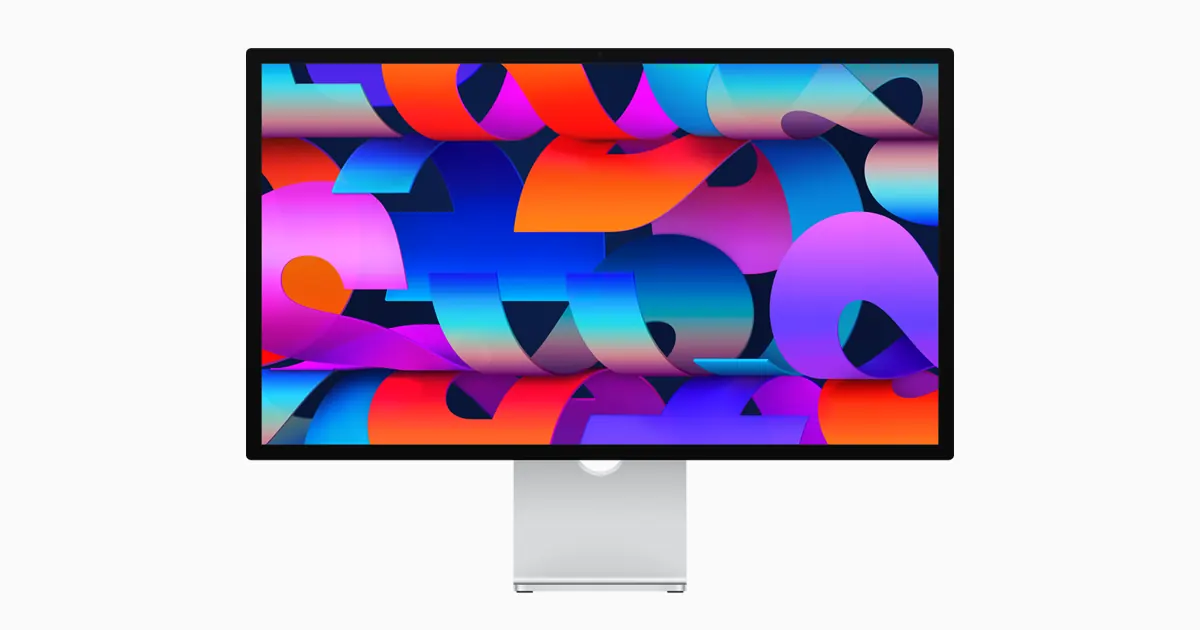
Review Studio Display 2026: beautiful image, impeccable integration and hard-to-swallow price
Expensive monitor only makes sense when it improves the experience every day, not when it looks like a technological gem in two minutes of unboxing. The Studio Display updated in 2026 enters precisely into this type of debate. Apple continues to bet on a 27-inch 5K screen with strong brightness, wide color, integrated camera, microphones, competent sound and now Thunderbolt 5. In other words, it wants to sell more than a panel: it wants to sell a central piece of the Mac ecosystem. The fair question is not whether the product is beautiful or well finished. This was already expected. The question is whether it delivers value proportional to the price in a market full of technically strong monitors, some cheaper and others more flexible. The answer continues to be “it really depends on who buys it”.
What he delivers today
The official page summarizes Apple's argument quite clearly: 27-inch Retina 5K display, 600 nits, P3, 12 MP camera with Center Stage and Desk View, microphones, speakers and Thunderbolt 5. The Studio Display wants to be a monitor that reduces the need for accessories around the desk and fits naturally into the flow of a MacBook Air, MacBook Pro or Mac Studio. This has real value for anyone working with text, images, video, product design, development or constant meetings. It is a product that sells visual quality, integration and setup tidiness at the same time.
The technique behind
The technical advantage of 5K on 27 inches is known: pixel density high enough for extremely sharp text without compromising comfortable scaling on macOS. For anyone who spends their day reading, writing and dealing with dense interfaces, this matters a lot. The P3 color and high brightness broaden the appeal for visual creation, while the camera, mics and speakers enhance the idea of an "all-in-one" desktop monitor. Thunderbolt 5 reinforces this hub role. The technical problem appears when the product is compared not with average monitors, but with what the premium market already offers in terms of refresh, HDR, local dimming, modular ergonomics and relative cost. Apple continues to prioritize integration and consistency over maximum flexibility.
Where it gets it right in real use
In real-world use, Studio Display is especially good for those who live on Mac. Text looks beautiful. The connection experience tends to be clean. The built-in sound is better than on regular monitors. The camera and microphones help simplify the table. Recent reviews continue to point out this set as a legitimate differentiator: it is a monitor that looks like an Apple product in every detail, for better or for worse. For programmers, writers, interface designers, photographers, and people who value extreme clarity in reading, the visual experience remains strong enough to warrant serious attention.
Where does it limit
Price remains the big obstacle. There is also the feeling that Apple still offers less flexibility than it should for this price, whether in ergonomics, variety of versions or relationship with features that competitors have been pushing for a long time. Not every professional needs the integrated combination of camera, audio and hub; many would prefer to invest the same amount in a more advanced panel and separate accessories. There is also the strategic issue: Apple is very good at selling the comfort of the ecosystem, and this comfort sometimes masks how much the product charges for simplicity.
The future it anticipates
Studio Display anticipates a future in which premium monitors stop being just imaging surfaces and become complete extensions of the computer, with integrated connectivity, audio, camera and collaboration. Apple has been playing this game for years. The difference now is that the rest of the market has also started to respond. The open question is whether the company will continue to sustain high pricing with incremental refinement or whether it will need to increase the technical ambition of the panel itself to maintain a clear advantage.
Verdict
The Studio Display 2026 remains a very desirable monitor for those who work within the Apple ecosystem and value clarity, integration, and a less cluttered desk. It is not the most rational purchase for everyone and remains too expensive to be universally recommended. But, for the right audience, it still delivers a very rounded visual and operational experience.
Sources
- https://www.apple.com/studio-display/
- https://www.rtings.com/monitor/reviews/apple/studio-display-2026
- https://www.creativebloq.com/tech/monitors/apple-studio-display-2026-review-meet-the-new-boss-same-as-the-old-boss