Meta bets on AI wearables as assistive technology, not just gadgets
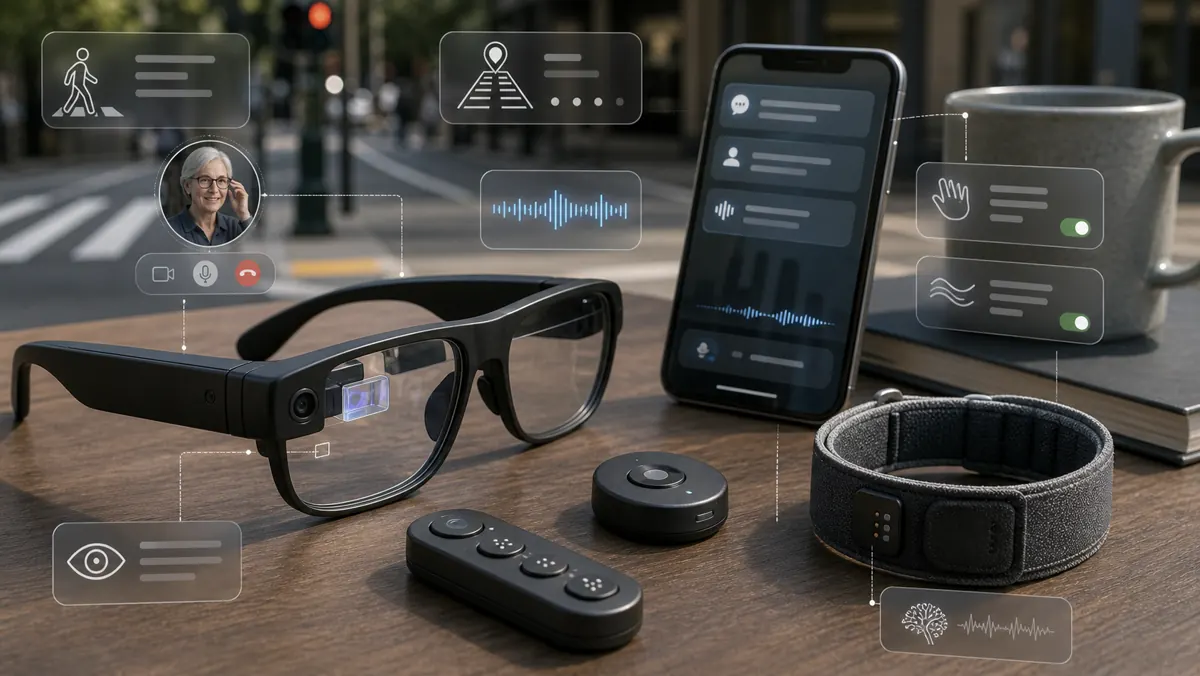
AI glasses are usually sold as convenience, style or technological curiosity. Meta tried to shift that conversation on May 18, 2026, by publishing an entire text focused on accessibility. The announcement brings together new functions for voice calls, real-time captions, physical shortcuts, Be My Eyes integration, third-party apps for blind and low-vision users and even research with muscle signals via electromyography. The confirmed fact is the expansion of this assistive package in the company's wearables. The most important point, however, is different: when glasses stop being merely a notification interface and become assistive technology, the quality bar rises dramatically.
What happened
Meta described concrete use cases with blind veterans and people with motor limitations, presented new group flows and a service directory with Be My Eyes, promised voice controls during WhatsApp, Messenger and Instagram calls and highlighted the Device Access Toolkit so third parties can bring apps to the glasses. The text also mentions integrations such as OOrion and Aira, along with research involving Meta Neural Band in partnership with Carnegie Mellon. Confirmed fact: the company is expanding assistive resources and trying to build an ecosystem around them. Plausible inference: Meta sees accessibility as one of the strongest paths to justify AI wearables beyond early-adopter enthusiasm.
The science behind it
From a technical point of view, assistive wearables require a difficult combination of computer vision, speech recognition, synthesis, low latency and an almost hands-free interface. When Meta talks about describing surroundings, captioning conversations or starting contextual help by voice, it is packaging multimodal perception in a format that must be discreet, fast and reliable. This is very different from running a chatbot on a phone. There is also a body-interface component. The electromyography research matters because it points to control through muscle signals, something especially promising for people with limited mobility. In short, the science of the announcement is about turning environmental perception and natural control into practical autonomy with as little physical friction as possible.
Why it matters
In real life, the potential impact is large. For blind and low-vision people, AI glasses can serve as an additional layer for reading the environment without occupying the hands. For users with reduced mobility, voice and configurable buttons reduce dependence on the smartphone. For developers, the Device Access Toolkit opens a new surface for assistive software, although still early. There is also an important symbolic effect. When a big tech company positions a wearable as assistive technology, it shifts product evaluation from something "cool" to something that must work under criteria of safety, accuracy and dignity. That is positive, but risky: promising autonomy and failing in a critical context is much more serious than launching a mediocre gadget. In assistive technology, a small but consistent improvement is worth more than a spectacular feature that only works under ideal light, noise and connectivity conditions.
The future it anticipates
The plausible scenario is that AI wearables find their most solid usefulness first in niches with high functional value, such as accessibility, assisted navigation and hands-free support, before becoming a mass habit for the general public. What is confirmed is Meta's progress in that direction. What remains an inference is whether the company can maintain quality, privacy and long-term support in such sensitive use cases. A decisive question also remains: when glasses see the environment for you, how do we define the limit between reliable help, excessive dependence and collecting too much context?
What to watch
Watch the response from accessibility communities, the speed of app ecosystem expansion and the availability of features outside the United States. Independent tests of accuracy and robustness in noisy environments, low light and distracting spaces will also matter. If Meta gets this right, AI wearables may stop looking like expensive toys and start occupying a legitimate place in assistive technology. If it misses, the entire market will learn that social usefulness in hardware requires much more than a good demo.
Sources
- https://about.fb.com/news/2026/05/meta-ai-wearables-changing-the-game-for-disabled-people/
- https://about.fb.com/news/tag/ai-glasses/