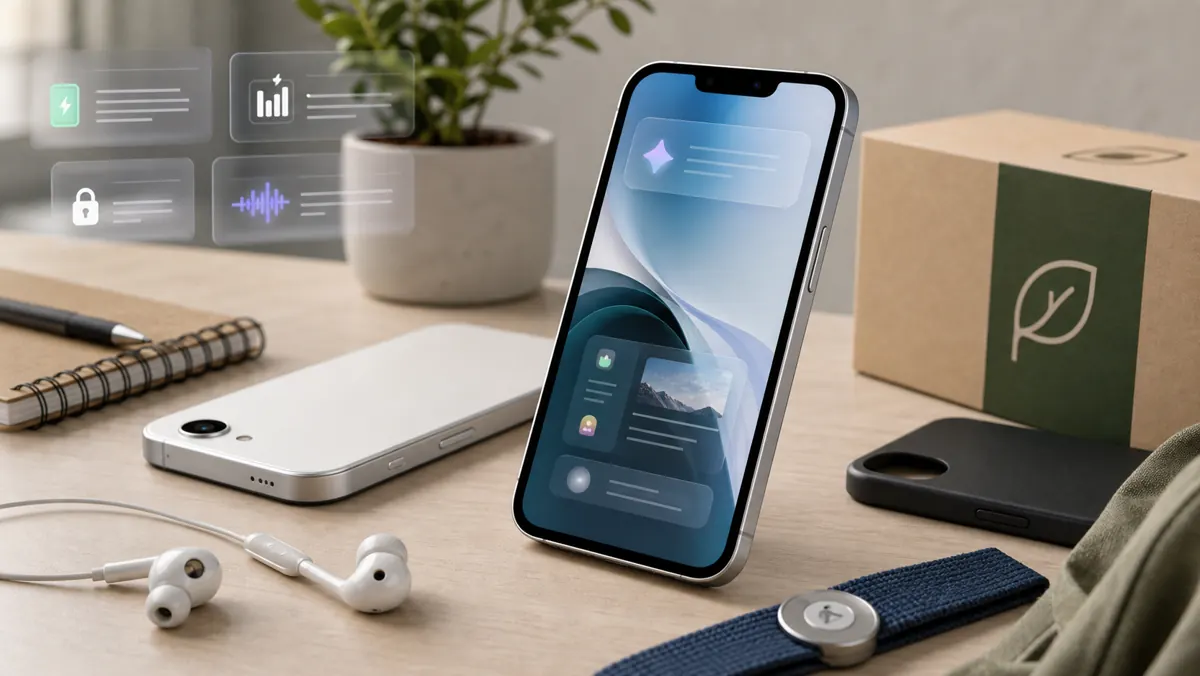
iPhone 17e and affordable AI: what to expect from a cheaper iPhone in the Apple Intelligence era
The iPhone 17e should still be treated as a rumor, not a confirmed product. Even so, the idea of a more affordable iPhone with Apple Intelligence is relevant because it shows where the market is heading: AI cannot be limited to just the most expensive devices.
After the iPhone 16e, Apple signaled that it still sees room for a modern entry-level line, with a current design and a lower price than the main models. The challenge for the 17e would be balancing cost, performance, camera, battery and support for AI features.
What would make sense technically
An entry-level iPhone in 2026 must have a chip capable of running local Apple Intelligence resources. This means sufficient Neural Engine, adequate memory, and integration with private cloud services when the task requires more capacity. A cheap device that doesn't come with the AI layer would age quickly.
It will also be important to look at the camera and battery. Mobile AI relies on sensors: photos, video, voice, location and visual context. At the same time, the average user wants autonomy, price and reliability, not just AI demonstrations.
Why this matters
If Apple brings AI to cheaper models, it expands the Apple Intelligence user base. This strengthens developers, services and ecosystem loyalty. It also pushes mid-range Androids to offer local AI, not just cloud capabilities.
The risk is creating a fragmented experience. If some features only run on Pro models, entry-level users may feel like they bought an "almost smart" device. Apple will have to decide which functions are essential and which are premium.
The future it anticipates
The affordable smartphone of the future will not be defined solely by camera or screen. It will be defined by how much it understands the user without invading privacy. Summarizing messages, organizing photos, improving accessibility, translating audio and helping with daily tasks can matter more than an isolated benchmark.
The iPhone 17e, if it exists, will be a test of democratization. Mobile AI only becomes culture when it reaches more people's pockets. The question is whether Apple will be able to do this without diluting the experience it sells as a differentiator.
What to watch now
Look for signals in chips, RAM, software support and pricing policy. An affordable AI-enabled iPhone will need updates for years. Otherwise, it becomes cheap at launch and expensive in the life cycle.
Practical impact
For the average user, the question will not be how many trillions of operations the chip does. Whether the device helps solve simple problems: finding an old photo, summarizing a long conversation, improving accessibility, translating audio, explaining an image and protecting personal data. Accessible AI needs to appear in everyday tasks.
For Apple, the "e" line could be a strategic bridge. It keeps users in the ecosystem, creates a gateway to services and expands the Apple Intelligence base. But you also need to avoid feeling like a second-class product. An affordable iPhone with few AI features could frustrate the very audience it should win over.
The market question
Mid-range Android already moves fast. Chinese manufacturers and Samsung are able to deliver large batteries, good screens and AI features at aggressive prices. Apple doesn't need to win on the lowest price, but it needs to justify the premium with longevity, privacy, camera and fluidity.
What to watch now
The best signal will be long-term support. An iPhone 17e will only be truly affordable if it lasts for many years, receives important features, and isn't stuck with a limited experience after one or two versions of the system.
Closing
The iPhone 17e, if it comes, will be observed as a scale product. It can show whether Apple wants AI to be an experience for every user or an argument reserved for those who pay the most. The difference seems commercial, but it is cultural. Accessibility, translation, organization and privacy features only change everyday life when they reach devices that many people can afford. Category "e" could be that test.
What will separate a good affordable device from simple cost cutting will be consistency. Chip, battery, camera, memory and AI need to work together. If one of these pieces is missing, the phone could feel modern at launch and limited when the AI capabilities mature.
Sources
- https://www.apple.com/iphone-16e/
- https://www.apple.com/apple-intelligence/
- https://www.macrumors.com/guide/iphone-17e/