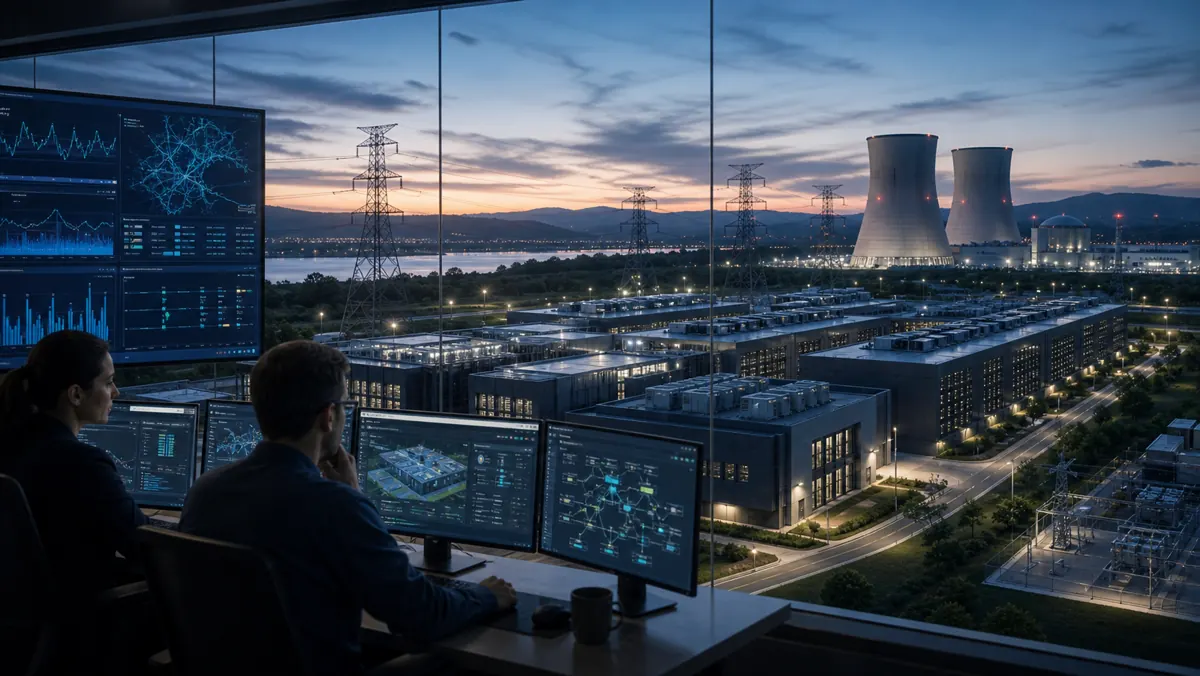
AI data centers and nuclear energy: the quest for continuous electricity has become part of the model race
Artificial intelligence has brought an uncomfortable question to technology: where will the electricity come from? The answer is prompting the industry's biggest companies to look again at nuclear energy. Not as a futuristic fantasy, but as a firm source, with low carbon emissions and capable of operating 24 hours a day.
Microsoft, Google, Amazon and Meta have already announced agreements, partnerships or initiatives linked to existing reactors, small modular reactors and new nuclear projects. The reason is simple: AI data centers need a lot of power, and demand doesn't match well with intermittent sources without robust storage, networking, and planning.
Why AI changed the debate
Traditional data centers already consumed a lot of electricity. AI has upped the scale. Training models, running bulk inference, keeping GPUs cool, and powering high-speed networks creates an industrial burden. In some cases, the conversation moves from megawatts to gigawatts.
This growth puts pressure on power grids, climate goals and local communities. If energy comes from fossil fuels, AI increases emissions. If it comes from intermittent renewables without planning, it can create instability. Nuclear energy enters the debate because it delivers continuous and predictable power, precisely what data centers need.
What big techs are doing
Meta announced nuclear projects that could unlock up to 6.6 GW to support American leadership in AI. Google has an agreement with Kairos Power to accelerate advanced reactors, including the Hermes 2 plant connected to TVA's grid. Amazon maintains initiatives with nuclear energy and data centers close to plants. Microsoft, in addition to energy agreements, has been connecting AI, simulation and nuclear to accelerate licensing and operations.
These initiatives still have long deadlines and risks. Reactors require regulation, capital, fuel, public acceptance and supply chain. Small modular reactors promise more flexible scaling, but still need to prove cost and execution.
The future it anticipates
AI is making energy part of product strategy. The company that guarantees reliable electrical capacity is able to train, service models and negotiate contracts with more predictability. The company that depends on expensive or uncertain energy loses margin.
For the public, the topic requires caution. Nuclear energy can help with decarbonization, but it doesn't solve everything. Data centers also need efficiency, heat reuse, water management, responsible location and transparency about the impact on consumer bills.
The next phase of AI will be judged not just by benchmarks, but by infrastructure. Smarter models require a smarter physical foundation. The future of computing may depend as much on reactors and transmission lines as it does on GPUs.
What to watch now
The first sign will be schedule. Nuclear energy announcements are often ambitious, but projects take years. The difference between contract, license, construction and energy delivered is enormous. To assess the real impact, it will be necessary to monitor megawatts effectively connected, regions served and the final price of energy.
Another point is energy justice. Data centers cannot consume capacity that will be lacking for local homes or industries. Companies will have to show that their agreements increase supply, strengthen the network and respect communities. Otherwise, the clean AI narrative could turn into social conflict.
The question for the reader
Artificial intelligence can accelerate science, medicine and productivity. But if your infrastructure puts pressure on power grids and local resources, the bill appears off-screen. The responsible future of AI will require that every technical advance be accompanied by transparent energy planning.
Practical impact
For governments and regulators, the issue will require new coordination. Authorizing data centers without considering the electricity grid, water, soil, jobs and local tariffs can generate conflict. At the same time, blocking all expansion could push investment to less transparent regions. The mature response will be planning: where to install, with what source, under what compensation and with what public responsibility.
For AI companies, energy becomes a competitive advantage. Anyone who guarantees clean, stable and long-term contracted electricity will be able to train models with more predictability. Those who depend on the spot market or under pressure networks will be vulnerable to costs and interruptions.
Sources
- https://about.fb.com/news/2026/01/meta-nuclear-energy-projects-power-american-ai-leadership/
- https://www.kairospower.com/google
- https://www.aboutamazon.com/news/sustainability/amazon-nuclear-small-modular-reactor-net-carbon-zero
- https://www.microsoft.com/en-us/microsoft-cloud/blog/energy-and-resources/2026/03/24/ai-for-nuclear-energy-powering-an-intelligent-resilient-future/