AWS MCP Server Goes General and Brings Agents Closer to the Real Cloud
AI agents promise to write code, configure infrastructure and solve long tasks. But there is a huge difference between responding based on old knowledge and acting safely within a cloud account. In the real cloud, permissions, logs, costs, and regions matter. It is at this point that the AWS MCP Server attempts to enter.
AWS announced on May 6, 2026 the general availability of AWS MCP Server, a managed server based on the Model Context Protocol. The goal is to give agents and code assistants an authenticated and auditable way to query documentation, call AWS APIs, and run small scripts in a controlled environment.
What happened
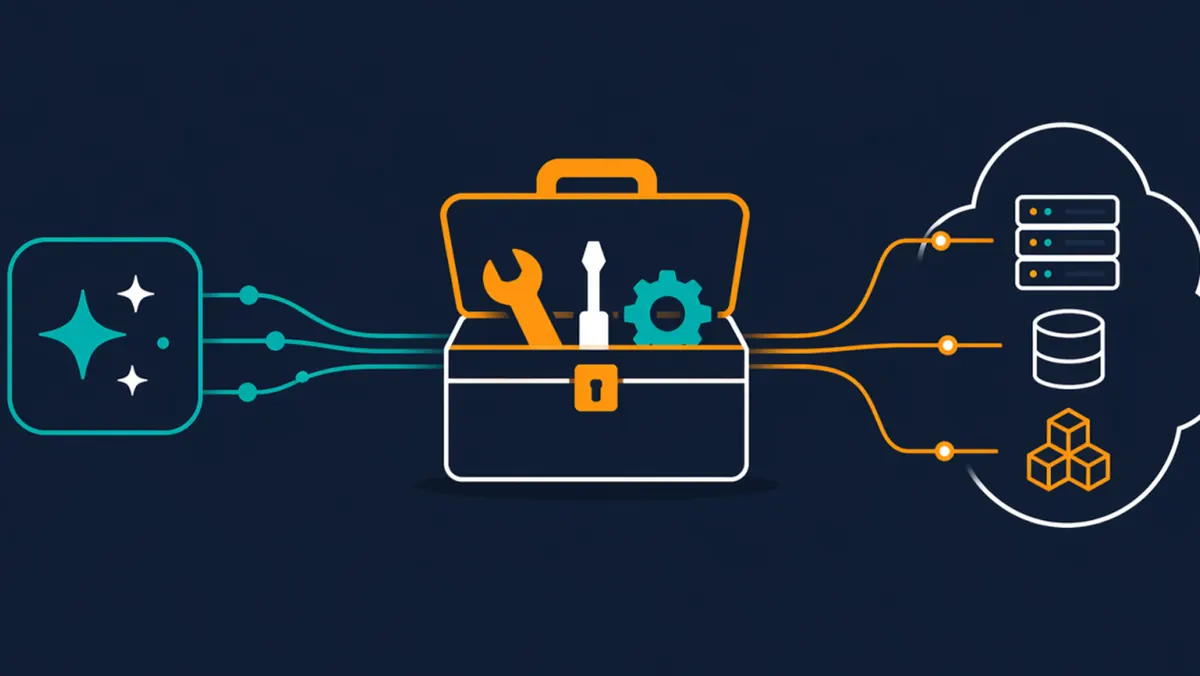
MCP works as a bridge between AI models and external tools. Instead of dumping entire documentation at the prompt, the agent can ask for the information they need, call an authorized tool, and log the action. In the case of AWS, this includes integration with IAM, CloudWatch and CloudTrail, essential points for companies that need to separate what was done by humans and what was done by agents.
AWS also highlights the exchange of Agent SOPs for Skills, a way to load specialized instructions on demand. The idea is to reduce useless context and make the agent more precise when working with specific services.
The technique behind
The problem that MCP tries to solve is structural. Language models are strong for reasoning about instructions, but weak when needing current state. Documentation changes, APIs gain parameters, security policies vary by account. An agent without an updated tool may suggest incorrect or dangerous commands.
With a MCP server, the agent no longer depends solely on model memory. It consults current sources, respects permissions, and operates within defined limits. This doesn't eliminate risk, but it does create a more governable surface.
Why this matters
For platform teams, the new feature reduces the distance between assistant and operations. An agent can search documentation, assemble an example, validate configuration and suggest adjustments with more real context. For security, the value is in traceability: knowing which tool was called, by whom, with what permission and at what time.
Without this layer, cloud agents tend to fall into two extremes: either they are too harmless, just explaining concepts, or they are too powerful, with broad permissions and little visibility. The MCP tries to occupy the middle: rail action.
The future it anticipates
The future of enterprise agents will be less about "a chatbot that knows AWS" and more about systems with tools, policies and logs. They will need to operate as limited technical users, not black boxes.
The question for companies is straightforward: if agents start creating infrastructure, who reviews their permissions, their costs, and their changes before they reach production?
What to watch out for
The critical point will be the permissions policy. An agent with too broad access can make costly mistakes. An agent that is too restricted becomes just a documentation seeker. The balance is in creating specific roles, test environments and approval steps for sensitive actions.
It will also be important to measure the quality of responses when the agent consults current documentation. A tool like MCP can reduce hallucinations, but it does not guarantee judgment. The agent can still choose a bad architecture or ignore a design constraint. Therefore, logs and human review remain essential.
In the future, MCP servers could become common infrastructure in companies: one for the cloud, another for databases, another for observability, another for internal tools. This network of connectors can make agents very useful, but it also creates a new security blueprint. The question is no longer "does the model know?" and becomes "can the model do it, with what permission and under what audit?".
This change should also alter internal documentation. Instead of just writing guides for humans, teams can prepare instructions and tools for agents. The quality of these interfaces will define whether automation helps or hinders.
In this scenario, poor documentation stops being a nuisance and becomes an operational risk.
Agents will only be good if the tools they receive are also good.
Sources
- https://aws.amazon.com/blogs/aws/the-aws-mcp-server-is-now-generally-available/
- https://aws.amazon.com/about-aws/whats-new/2026/05/aws-mcp-server/